


Published Apr 2026
2001: A SPACE
ODYSSEY
2001: A SPACE
ODYSSEY
2001: A SPACE
ODYSSEY
73
Visual production that outperforms many of the modern greats, but time has been less forgiving in regards to its storytelling
From:
Alinea Games
Stanley Kubrik
Year:
2018
1968
Genre:
Strategy, Text Based
Sci-Fi
Played:
Watched:
200+ hr
1x
Creator:
Stanley Kubrik
Years:
1968
Genre:
Sci-Fi
Watched:
1x
Published Feb 2025
Published Apr 2026

Widely regarded as the greatest
Sci-Fi ever made, but does it stand the test of time?
It’s been extremely hard to rate this one. I’m watching it for the first time in 2026, recognizing that a lot of its impact and greatness comes in relation to the originality and groundbreaking nature it offered viewers in and around 1968. That said, there’s quality here that transcends time, but also, I would argue, aspects of the storytelling that haven’t held up well with age at all.
This is not to say that viewers today cannot glean their own unique value through a modern lens. We're witness to just how visionary it is, with accurate portrayals of space and humanity’s working relationship within it; natural language AI and the challenges with its integration; and the general details depicting our total adoption of technology, even if the timeline is a little off.
It’s also original in ways that feel unobtainable today. Modern directors couldn’t dream of making a movie like this. Production companies simply would not allow them to, and admiration for the unorthodox has been conditioned out of audiences. Dune, for example, has been good, but it’s very safe. The entire TV and movie landscape today is, in fact, more homogenized than it’s ever been, so experiencing something like A Space Odyssey brings a jolt of clarity through the extreme contrast it provides against the bland. It made me wish for the return of this kind of bold cinema and solidifies my appreciation for just how brilliantly this might have shone when it hit screens.
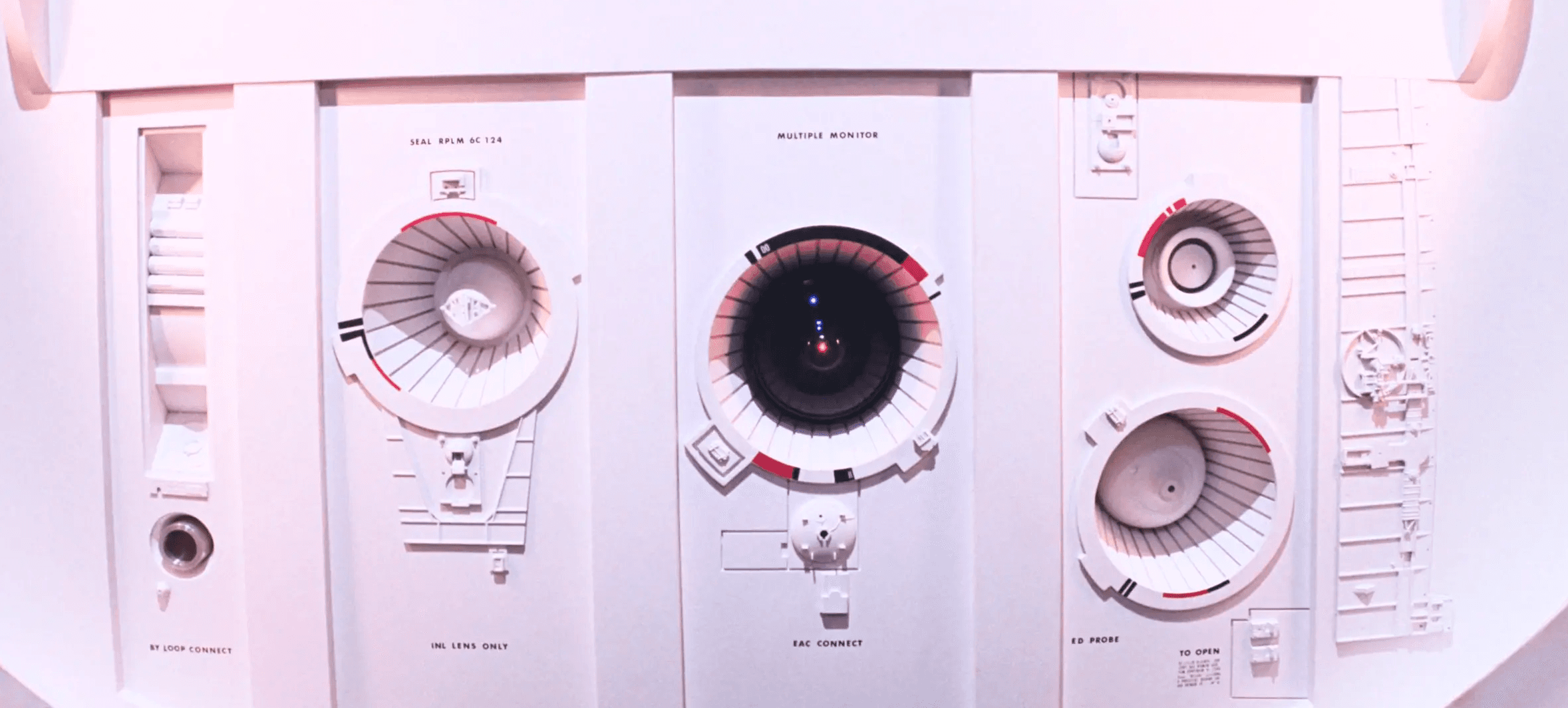
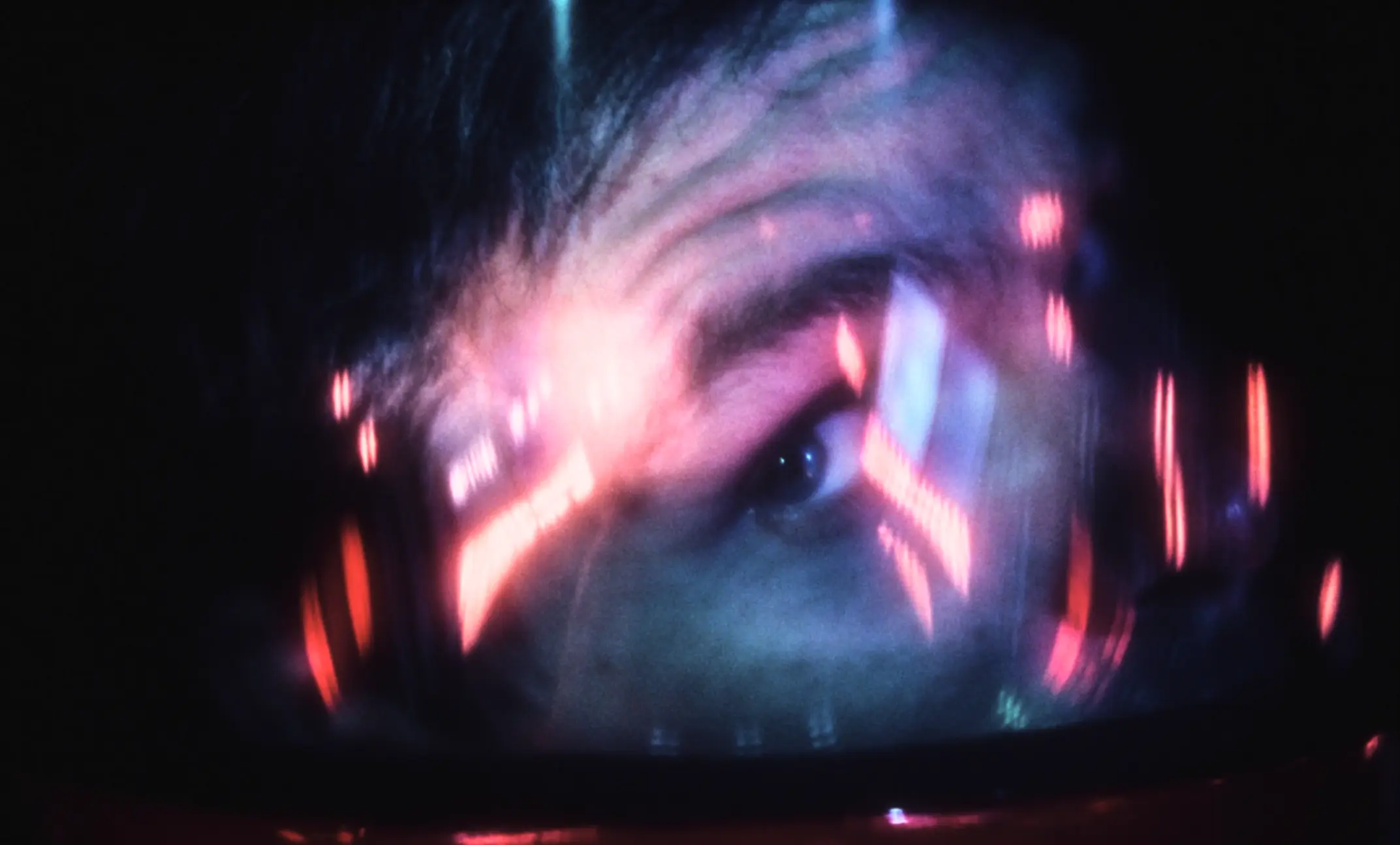
And its most impressive qualities, namely the visual production and set design, are so outstanding that they surpass the majority of sci-fi craft made 60 years later. I’ll use Villeneuve’s Dune again as an example, as it’s considered our era’s visual masterpiece. As stunning as those movies certainly are, they are much less tangible and emotional than Odyssey. They manufacture aesthetic in post-production through color grading, and leverage the vast supply of dramatic real-world locations to do some heavy lifting. Their CGI is grand, but expensive, so it’s delivered in relatively quick snapshots here and there, in scenes that are so spectacular or alien that they’re never relatable at a deeper level.
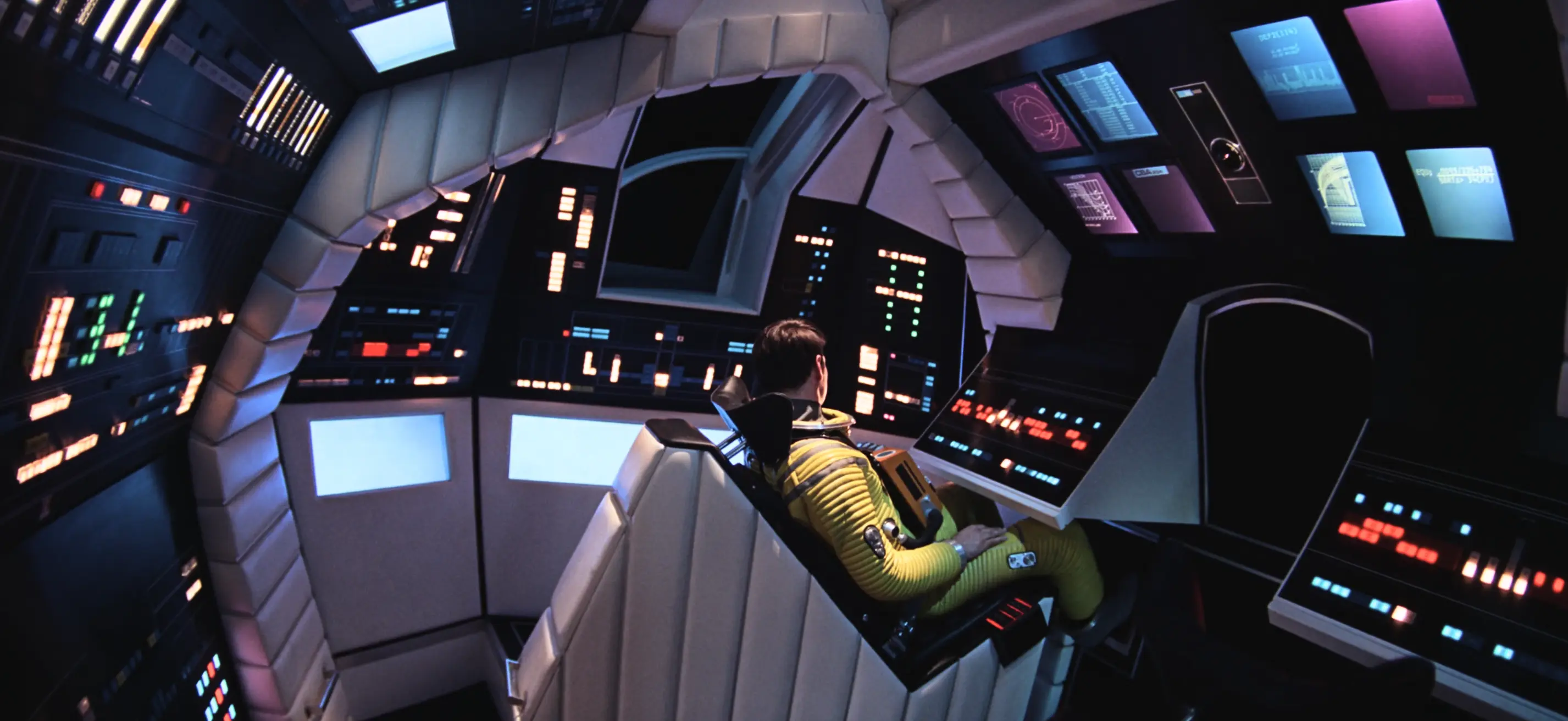
With Odyssey, you get much more time to absorb and enjoy things. The world is slowly and carefully presented, and atmosphere is earned from some of the best real-world lighting I’ve seen used in film. The technical challenges, concerning things like gravity and wormholes, are fully embraced and lead to more interesting interactions that go beyond background set pieces. Even the UI and ship controls feel real and functional, and also get their moments of focus to contribute to the storytelling in meaningful ways. Its much more personal than todays typical sci-fi, and holds itself as an art form in its own right.
I was a big fan of the 2014 Tom Cruise movie Edge of Tomorrow, which is based off the same light novel as this new anime adapatation. The die-wake-repeat motif is what makes both these movies so good, giving us that video game premise in real life and, with it, the opportunity for satisfying concept design, cool action scenes and interesting explorations into an evolving character and the psychological ramifications that comes with such an experience.
I’ll start by talking about the visuals, as it’s the biggest selling point. I was surprised to learn that despite the film’s very 2D feel, Studio 4°C’s approach was almost entirely created from a CG workflow. Impressive! They’ve definitely captured an authentic, hand-drawn aesthetic, but one that still has plenty of fluid movement and perspective-shifting action that feels natural and pleasing to view. There's also some fantastic concept design, giving off Evangelion vibes at times, and a vibrant color palette for some trippy, flora-based sci-fi designs, which I thought were an amazing direction to take the Mimics in.
Director Akimoto discusses a few of the techniques he and his team used to achieve his “limited” approach to animation. If the 3D models contain too much surface detail, your eye “sticks” to the object and the motion stops feeling snappy or stylish. Their response: strip the model down — “as few textures as possible,” leaning on color planes and linework instead, and even dropping frame rates to as low as 8 frames per second, which Akimoto describes as “satisfying” and giving a “certain flair — a touch of theatricality” to the final product. It puts more emphasis on the viewer completing the gaps in motion, and for whatever reason, that just works visually.
In my opinion, CGI has been a total disaster for animation in the last two decades. Anime feels more mass-produced and generic than ever, and has undergone a complete artistic regression. Although there have been occasional moments of CG brilliance, the soul and charm that made you revel in the beauty of the medium have almost completely vanished. It’s been almost 40 years since Akira, and despite all the technical advances and effort, nothing has since surpassed it.
So the question remains: can CGI eventually reach a level of quality and technique such that it can successfully reproduce the same conscious and subconscious delight the brain experiences with real hand-drawn animation? All You Need Is Kill gives me confidence it might — it’s a genuine step forward for the industry. It’s one of the best-looking animated films in a long time, but as beautiful as it is, I’m still not sure if it’s as goosebump-inducing as what your average anime series was producing in the 80s. One has to wonder whether the purists will continue to wait and watch studios make marginal gains for another decade, or if AI is going to step in and start outperforming them aesthetically through its ever-growing skill of replication.

And for one final Dune reference, I’ll share a recent quote from its director, Denis Villeneuve:
“The real test for a great film is not the critics, it’s not the film festival, it’s not the accolades. It’s not even the box office. The real test for a movie is time.”
Odyssey certainly enjoys high praise from critics today, but I learned that its premiere and initial reception were in fact quite disastrous. Top critics tore it apart, cinemas emptied, and its writer, Arthur C. Clarke, was in tears (of despair). Its slow and abstract nature was seemingly too jarring for general audiences, but the artists, aficionados, and psychedelic journeymen were happy to embrace it, thus giving it a cultural lifeline that no doubt cultivated the path from counterculture to mainstream acceptance and then its eventual universal acclaim.
Time has not been as forgiving. I've praised the visuals, but some wormhole shots felt dated, namely those generic helicopter shots over landscapes featuring badly blown-out colors, adding to the tediousness toward the end of that sequence, which is already five minutes too long.
There are other moments that outstayed their impact too, and generally speaking, the film’s pacing is challenging. Don’t get me wrong, I love a slow build, and I understand the desire to draw things out in a movie set in a massive void, but you could cut an hour (or more) from this film and tell the exact same story without losing much at all. Some of those savagely long shots really made the accompanying music and sound design increasingly unpleasant too.
There’s also little to no character development. HAL is amazing - acted and scripted to perfection - and is the best part of the story, but the rest of the cast is written without much content and emotion. The barebones dialogue, although excellent at elevating the visuals and atmosphere further, does leave less opportunity for memorable character moments to arise.
Honestly, it is very dull at times, and the meaning that is supposedly asking to be uncovered through observation and analysis I think is overstated. For example, the theme of human evolution at its core actully says very little. Beyond that, there is plenty of mystique and symbolism to speculate on, but no narrative to tie it down. Digging into threads and explanations post-watch revealed some interesting philosophical insights, but that's not impressed upon you when watching.
Today, we’ve also had the benefit of going much deeper into the mysteries of space and metaphysical reality (thanks to Hawking, Sagan, Asimov, etc.), so my “modern” imagination can move much faster and into more exciting places than this film does.
I know it came 11 years later, but Ridley Scott’s Alien proves you can still be thematically rich and wonderfully atmospheric without sacrificing room for emotionally powerful narratives and characters. That movie is so much better paced, more entertaining, and brings much of the same suspense and mystery as Odyssey. Corporatism, reproduction, fear, isolation, and gender-power themes are not obscure, but integrated cleverly into every aspect of the subtext and design, and even Alien’s vision for AI is bigger and more realistic than Odyssey's.
It may be unfair to make such comparisons, given the time gap and the deliberately more abstract and intellectualized vision Kubrick had, and it doesn't escape me that Alien, and sci-fi in general, is heavily influenced and built off of what Kubrik did. But personally, as a viewer, I want to be entertained, and I don’t see the pursuit of deep analytical content as mutually exclusive or in competition with that goal.
I want to feel for my characters and their journey, or be taken on a ride. A Space Odyssey does have its moments, but mostly didn’t reach me on that emotional level, and I consider that such a core component of storytelling that I struggle to view this as the masterpiece it is claimed to be today.
That visual experience is enough to make this movie worth a watch, but I would have liked to be more engaged with the story, which doesn’t bring the same intensity. To make a comparison with Edge of Tomorrow, it doesn’t have the same psychological impact of what it means to repeat the day, and the conflict with the Mimics is more generic. Rita’s inner struggles are represented just about enough, but her trauma backstory feels random and underdeveloped. The broader context and implications of the characters in the world are also lacking, with few interesting character interactions to bring that depth. Introducing Kaiji helped, but I think the very short runtime of 80 minutes hindered some of the potential to go deeper more broadly.
Japanese anime also has a tendency to go way too far with expositional dialogue, and this film is no exception. That lazy writing really dials up in the last act, where the head scientist infers astonishingly complex insights and plot points from very little, artificially adding jeopardy by forcing in new rules that limit the repeating-day mechanism and the characters' relationship with Darol. The final battle, while looking amazing, is also a bit too easy and unearned. These are not deal breakers, but they certainly demonstrate why this movie is a step down when compared to Edge of Tomorrow’s writing, which, to be honest, already had a touch of generic Hollywood sci-fi to begin with.
This all said, I liked the first act and how it paced through the journey and Rita’s learning curve. The romance dimension was nice too. I enjoyed myself throughout the movie, and when the animation and best story moments combine with what can be a beautiful atmospheric soundtrack, it felt like peak anime — making me smile in my seat as I watched it on the big screen. I likely wouldn’t watch it again, but I am glad it exists and will certainly be enjoying some screengrabs of those wide atmospheric shots when the digital copy finds its way online.

VERDICT
I admire this film much more than like it. The craftsmanship is astonishing and timeless, and its influence on cinema undeniable, still offering a message for modern cinema and audiences today. However the directing choices and artistic ambition hold back the pacing, the characters, and the story, making me question how deserving it really is of masterpiece status, given this lack of a gripping story. It remains a landmark of film history - visionary and important - but as a viewing experience, it's more impressive than compelling.
RATING BREAKDOWN
Story
60
Directing:
74
Visuals / Production
97
Acting / Dialogue:
72
Music / Sound
75
BONUS
concept design
concept design
original
groundbreaking
FINAL
73
Thanks for reading
Thanks for reading
Thanks for reading