
RGR

RGR

Published Feb 2026

SAGA OF THE SWAMP THING

SAGA OF THE SWAMP THING

87

A visionary character reinvention, entwining horror, love, and metaphysics together through Moore's trademark cerebral storytelling
From:

Alinea Games

Alan Moore

Year:

2018

1982 - 1987

Genre:

Strategy, Text Based

Superhero

Played:

Played

200+ hr

38 hr

Creator

Alan Moore

Year

1982 - 1987

Genre

Superhero

Read

1x

Published Feb 2025

Published Feb 2026

The greatest comic book writer of all time, handed the character he was born to write.

SPOILERS
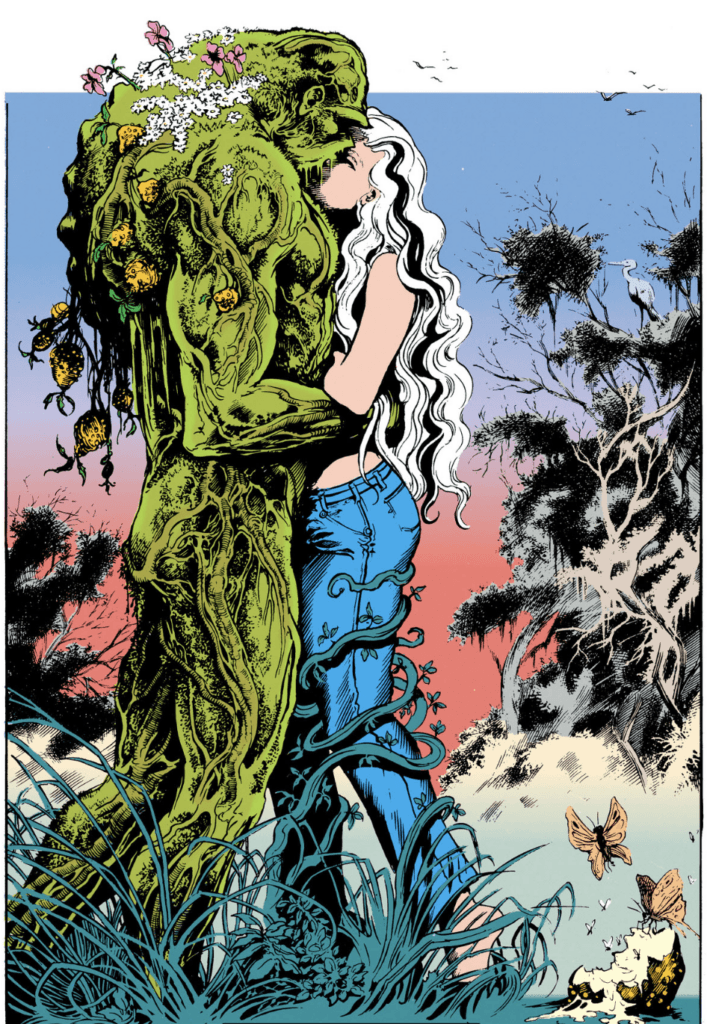
Legendary writer Alan Moore made his debut in the U.S. comic book industry with the revitalization of The Swamp Thing, entrusted with the IP in 1982 after the initial 24 issues completed in the 70s. He goes on to transform this character beyond muck-encrusted horror, creating something deeper, more cosmic, and more didactic than mainstream comics readers could have hoped for, stretching the creative boundaries of graphic storytelling and delivering one of the most applauded series seen in comic book history.


Moore is the perfect choice to take on this character. Out of all the heroes and monsters we see in the DC Universe, Swamp Thing comes with so much opportunity to crack into spiritual and metaphysical ideas, and when that door opens, Moore leaps through with all his visionary weight, diving deep into love, consciousness, and identity. Swamp Thing becomes this beautiful mossy vessel for a host of abstract ideas, and as the character's own confidence and creativity grows, so too does Moore's writing along with it.

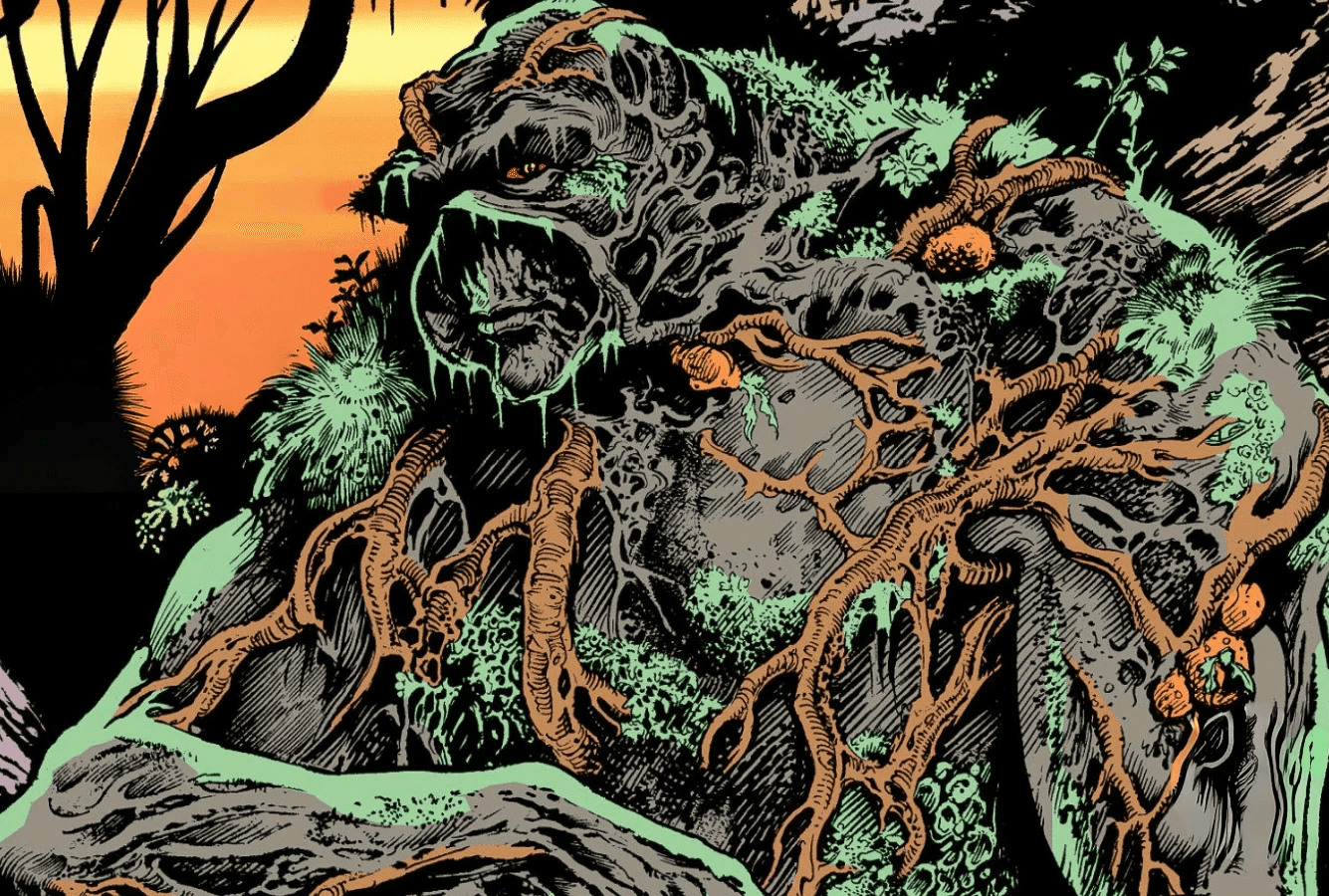
It all begins with that fantastic autopsy scene in volume one, with Moore literally and figuratively dissecting the creature in order to examine its mind and anatomy and provide the seeds for reinvention. Through science, pacing, and restraint, Moore quietly detonates the entire premise of the character, raising all these questions and observations that infer new mechanics and perspectives, pulling in a set of existential questions that go on to form the foundation of the saga.


You essentially go on that journey together with Swamp Thing, who learns more and more about himself and his role in the world. The tragic origin story is long gone, replaced with something much more beautiful and profound, and it's enjoyable to watch Moore take the story further into the ecological and cosmic nature of things, whilst also flexing his ability to take all those fantastical elements and somehow make them feel believable and grounded in known physics and reality.

As a result, things get psychedelic, philosophical and internal, demonstrated most poetically through the unconventional romance with Abby Arcane, of which there are many beautiful panels and flamboyant lines of prose that depict honest moments of grief and intimacy. I loved their initial realization of shared feelings, and was also so happy when Alec returned to Earth and scooped Abby up after all her pain. Their final scenes together in the last volume really made for a satisfying wrap-up to the story.

Before Watchmen, legendary writer Alan Moore made his debut in the U.S. comic book industry with the revitalization of The Swamp Thing, entrusted with picking up the IP in 1982 after the initial 24 issues that completed in the 70's. He sets out to transform the character beyond the muck-encrusted horror, creating something much deeper, more cosmic and more didactic than the mainstream comics readers would expect, stretching the creative boundaries of graphic storytelling and delivering one of the most applauded series seen in comic book history.


Moore was the perfect choice to take on this character. Out of all the heroes and monsters we see in the DC universe, the Swamp Thing comes with so much opportunity to explore spiritual and metaphysical ideas, and when that door opens, Moore leaps through it with all his visionary weight and experience, diving deep into love, consciousness and identity. Swamp Thing becomes this beautiful mossy vessel for a host of abstract ideas, and as the characters own confidence and creativity grows, so too does Moore's writing along with it.

It all begins with that fantastic autopsy scene in volume one, with Moore literally and figuratively dissecting the creature in order to examine it's anatomy and mind to reinvent the characters identity. Through science, pacing and restraint Moore quietly detonates the entire premise of the character, raising all these questions and observations that infer new mechanics, new perspectives and pull in a set of existential questions that form the foundation of the saga.


You essentially go on that journey together with Swamp Thing as he learns more about himself and his role in the world. The tragic origin story is shed, replaced with something much more beautiful and profound, and it's enjoyable to watch Moore take the story further and further into the ecological and cosmic nature of things, whilst also flexing his ability to take all those fantastical elements and somehow make them feel believable and grounded in known physics and reality.

As a result things get psychedelic, philosophical and internal, demonstrated most poetically through the unconventional romance with Abby Arcane, of which there are many beautiful panels and flamboyant lines of prose that honestly depict moments of real grief and intimacy. I loved their initial realization of shared feelings, and was also so happy when Alec returned to Earth and scooped Abby up after all her pain. Their final scenes together in the last volume really made for a satisfying wrap up to the story.

I do carry some mixed feelings about Moore's writing style. On the one hand, it's some of the most poetic and impactful writing you will ever find in comics. I sought out Swamp Thing for this reason, knowing it's considered some of Moore's best work. His writing can conjure more imagery than the artwork itself, and he has such a unique way with words. Horror is delivered with rhythmic perfection, and Swamp Thing's inner monologues actually feel botanical, with plenty of tenderness when interacting with Abby.

But sometimes it can be a case of too much of a good thing, and definitely feeling excessive in places. Hyper-poetic and metaphorical descriptions are found even in the most mundane of scenes, and it can comes across as overly indulgent, taking away impact in other places through overuse. Text can also be placed in great density alongside many unorthodox page compositions, so things can get a bit cumbersome in terms of consumption and pacing. I would have liked the artwork to breathe more, and the inclusion of more full page panels in general.

The very cerebral prose was also hit and miss for me. There were some chapters in the last volume I essentially skipped through because we get thrown into these highly abstract, disjointed side stories, where every line is so grandiose, so engineered, that absorbing it all and comprehending what's happening is fatiguing, and sometimes just plain confusing.

Take the off-planet story with the mercurial chair. Very bizarre and completely momentum killing at that stories narrative point. The volume 'Loving the Alien' was also very obscure, abandoning normal narrative logic deliberately for an experimental tale of a sentient plant planet who desires to mate with Swamp Thing. The writing felt more silicon than biological, and didn't work for me at all, nor did the artwork that supported it.

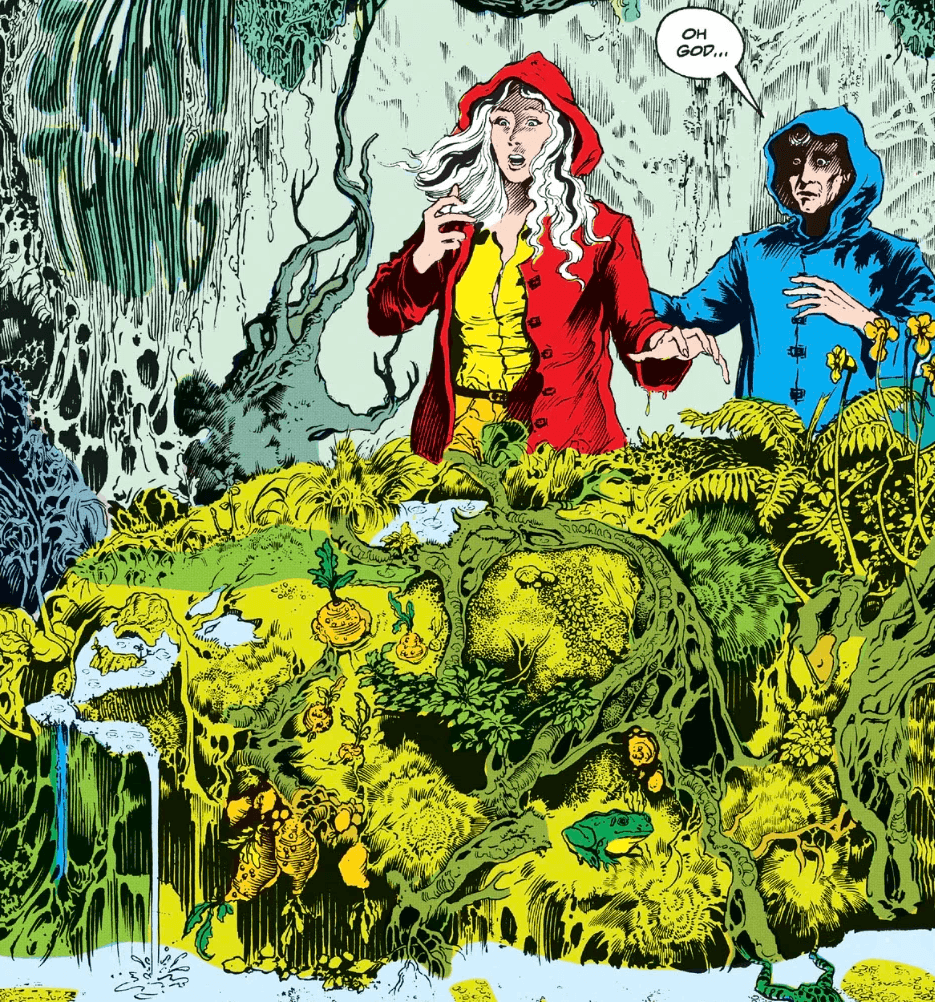
But when the cerebral is more measured, augmenting the more relatable writing and artwork, it is an absolutely glorious experience. The Gotham showdown, with it's punchy dialogue as the citizens and Batman come to terms with Swamp Things wrath, augmented with those wonderful descriptive panels describing nature's explosion through the city, were some of my favorite parts of the saga, as was Alec rebuilding the town of Houma on an alien planet to deal with his loneliness.


I also loved the volumes that portrayed the different folklore horrors unfolding across America and the climax with the Brujería, described brilliantly with all that malevolence and occultist lore underneath it. It was cool to see how Moore tackled the unleashing of the great evil, and Constantine's role as manipulator amongst superheroes to fight it off was a highlight too.

At that point in the story things were really picking up in terms of jeopardy, and overall the story development from vol. 1 to 5 carries this nice momentum and growth that I thought worked very well. Volume 6 is where I think it falters, not just with those aforementioned obscure off-world chapters, but also with another momentum killing plot relating to Abby's Frankenstein father, which felt like a volume 3 tale, out of place, and just unnecessary.

Vol. 6 was not bad however, with plenty of lovely galactic imagination on display, and that beautiful ending, but a bit disappointing given how strong it had been up until this point and ultimately, despite my inner voice telling me otherwise, is what prevents me giving it that legendary rating of 90 or above.
VERDICT

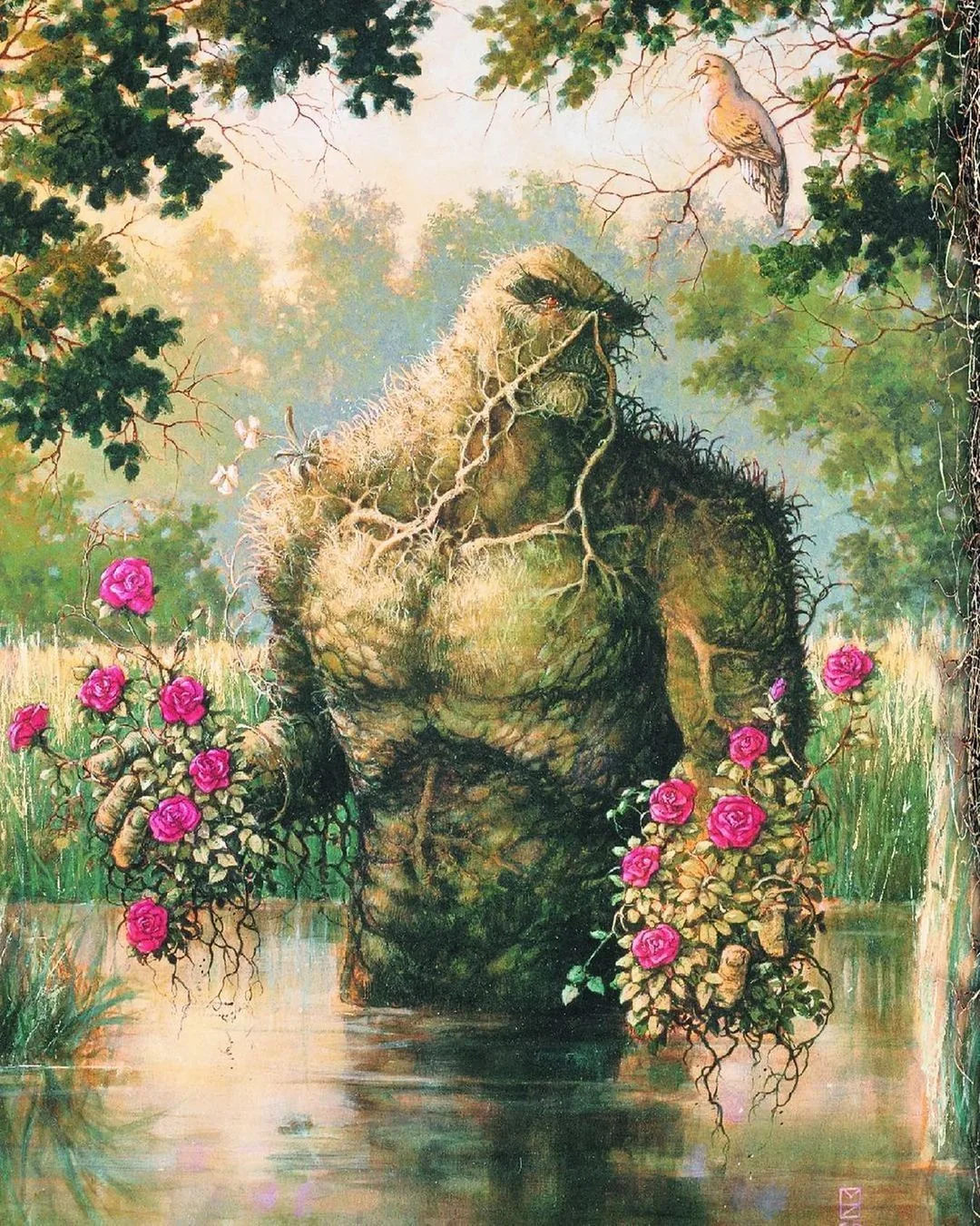
Ultimately, Swamp Thing is a landmark work that redefined the creative limits of mainstream comics, even if it occasionally buckles under the weight of ambition. At its best, Moore’s poetic, philosophical writing is deeply moving, visually evocative, and emotionally resonant, elevating the series to something very special. When that balance slips, the excess can disrupt momentum and dilute its impact, particularly in the last volume. Even so, its bold ideas, beautiful imagery, and character exploration ensure its legacy remains deserved—an excellent, if not flawless, achievement.

RATING BREAKDOWN

Story

85

Visuals

88

Dialogue

86

BONUS

concept design

originality

FINAL

87

Thanks for reading

Thanks for reading

Thanks for reading

CONTACT

contact@ratersgonnarate.com

CONTACT

contact@ratersgonnarate.com